# Showcasing research around the digital lives of women in Nigeria, Kenya, and Senegal
- Released on: 06-May-2026
- Organisation: Quicksand
- Service: Development
- Industry: Science and Research
- URL: https://miranj.in/work/digital-personas
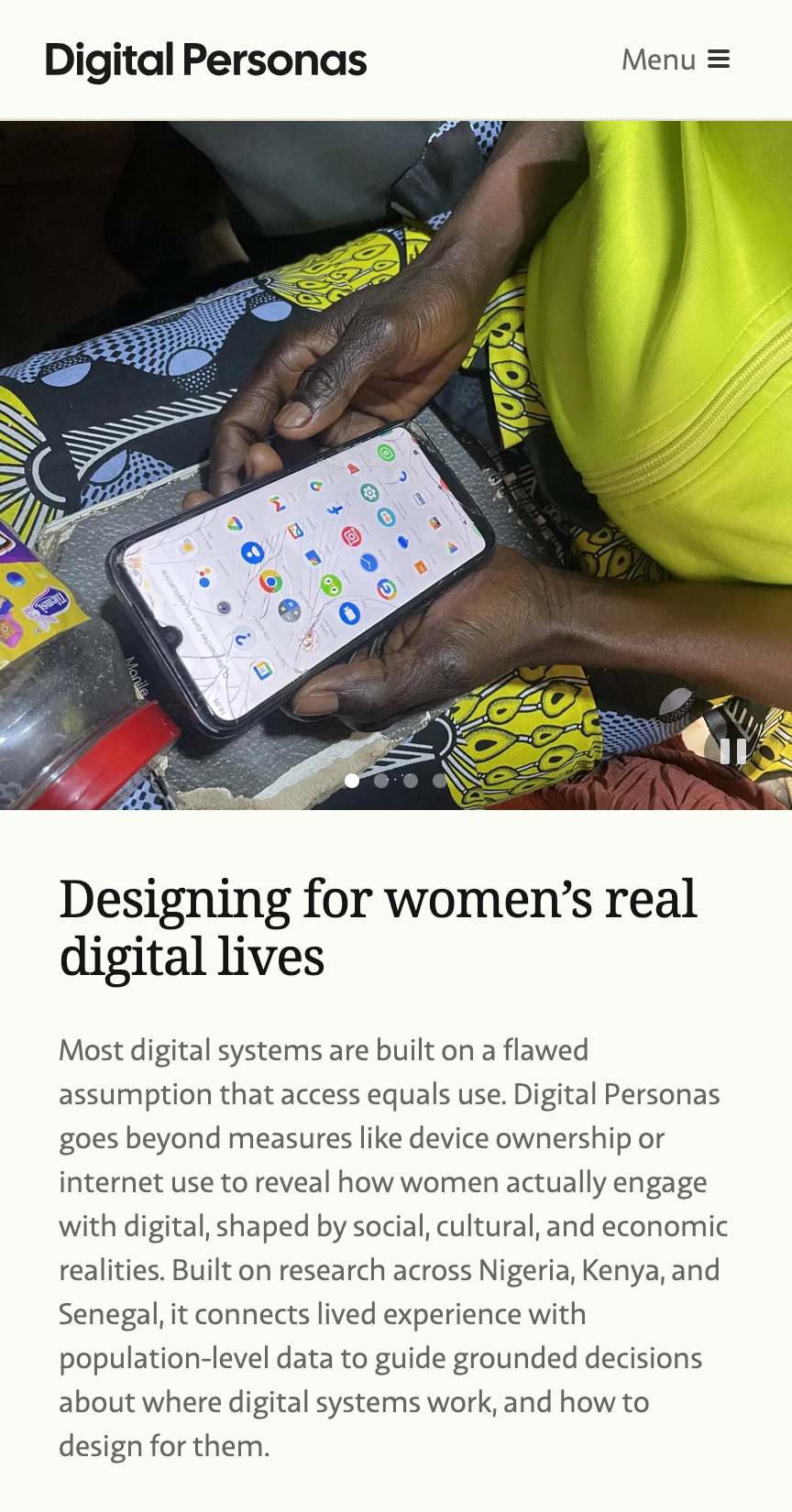
[_Digital Personas_][dp] is the result of a [Gates Foundation][4]–supported study conducted by [Quicksand][1] & [Stby][]. It explores [how digital tools and services intersect with and impact the lives of women across Nigeria, Kenya, and Senegal][6]:
> Digital Personas shows how women actually use digital in context, not just in metrics. It combines qualitative insight with population-level data to support more grounded decisions about where digital works, and how it should be designed.
To present their findings, the researchers wanted a website that could hold comparative, multi-region data and offer different ways of looking at the insights while remaining easy to explore.
Miranj came on board as the web development partner, with [Nitin Garg][2] handling the site’s visual design[^1]. Design and development ran in parallel, with the website built on [Craft CMS](https://craftcms.com/).
#### Flexible Dashboards, Annotated Narratives
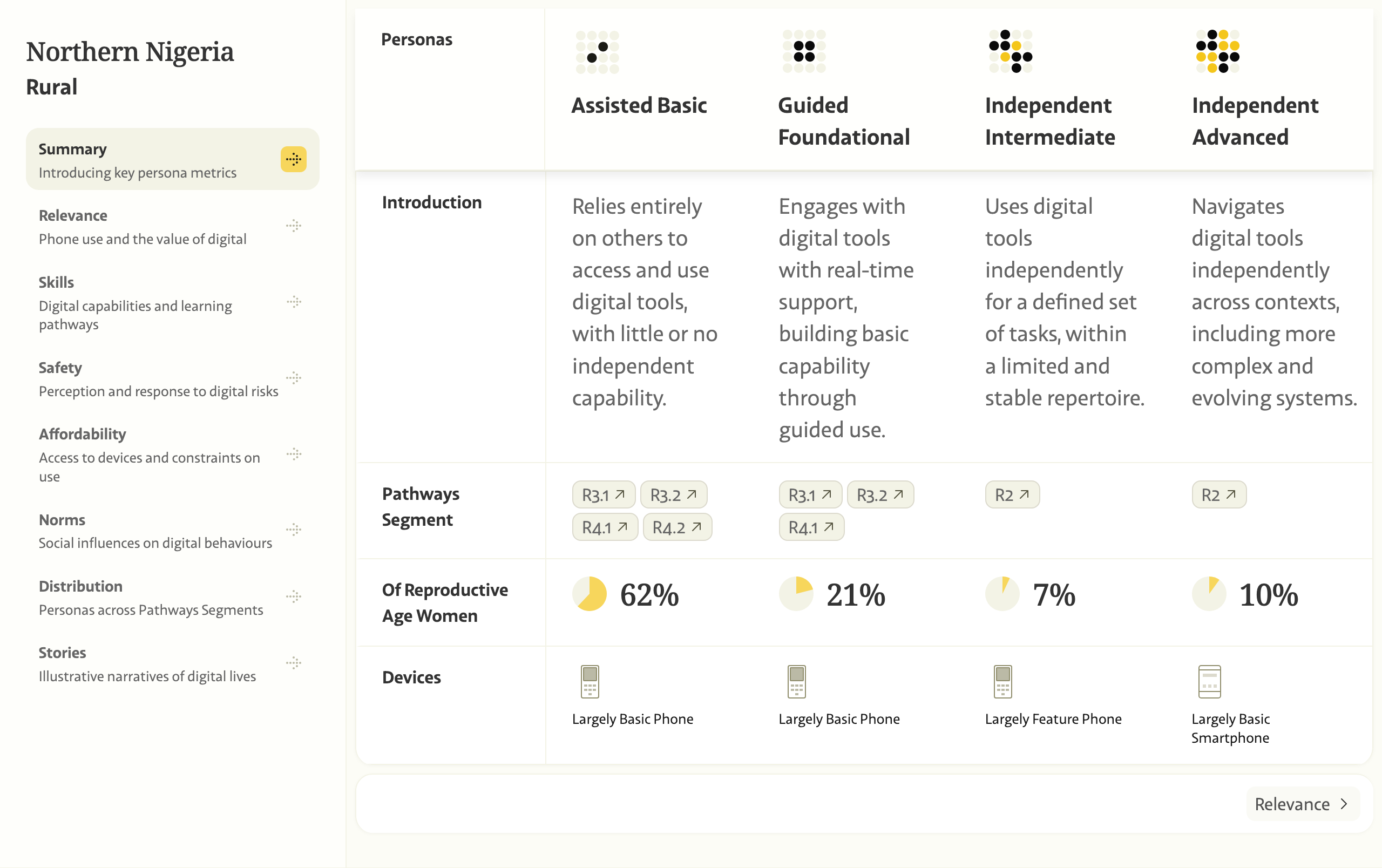
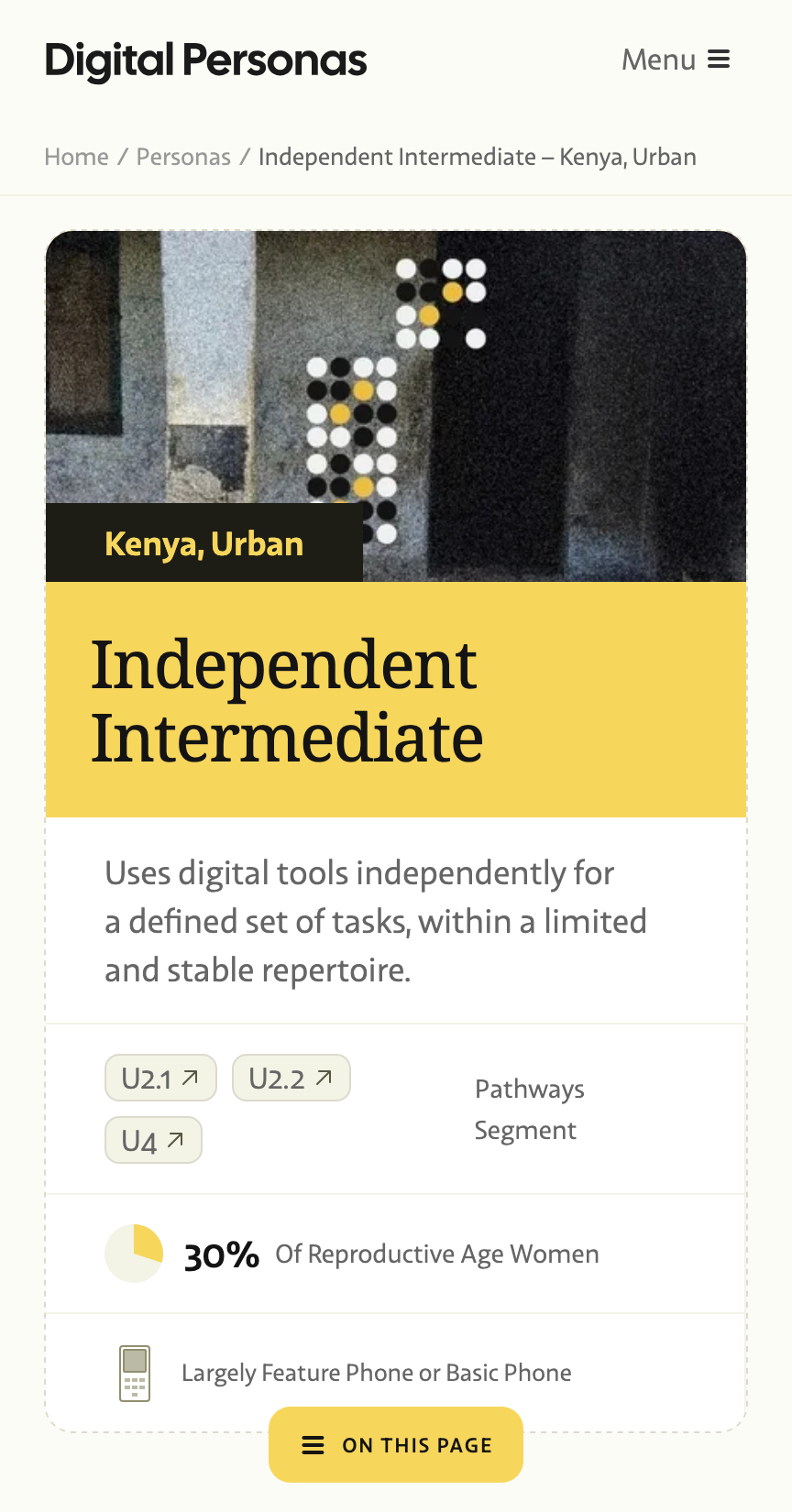
The core of the website is [a comparative dashboard][9] that lets visitors scan across _Personas_ and spot patterns at a glance. The challenge: the research data is heterogeneous. Different indicators need different treatments — metrics, pie charts, qualitative insights, pathway segments — and these vary across personas and countries.
[][9]
Rather than hardcoding a pre-decided structure, we gave the client the ability to define their own. They can compose dashboard columns, assign a visualisation type to each field, merge columns with similar content, and mix data types freely — all from within the CMS, without touching any code. This keeps the presentation flexible and the research team fully in control of how findings are displayed.
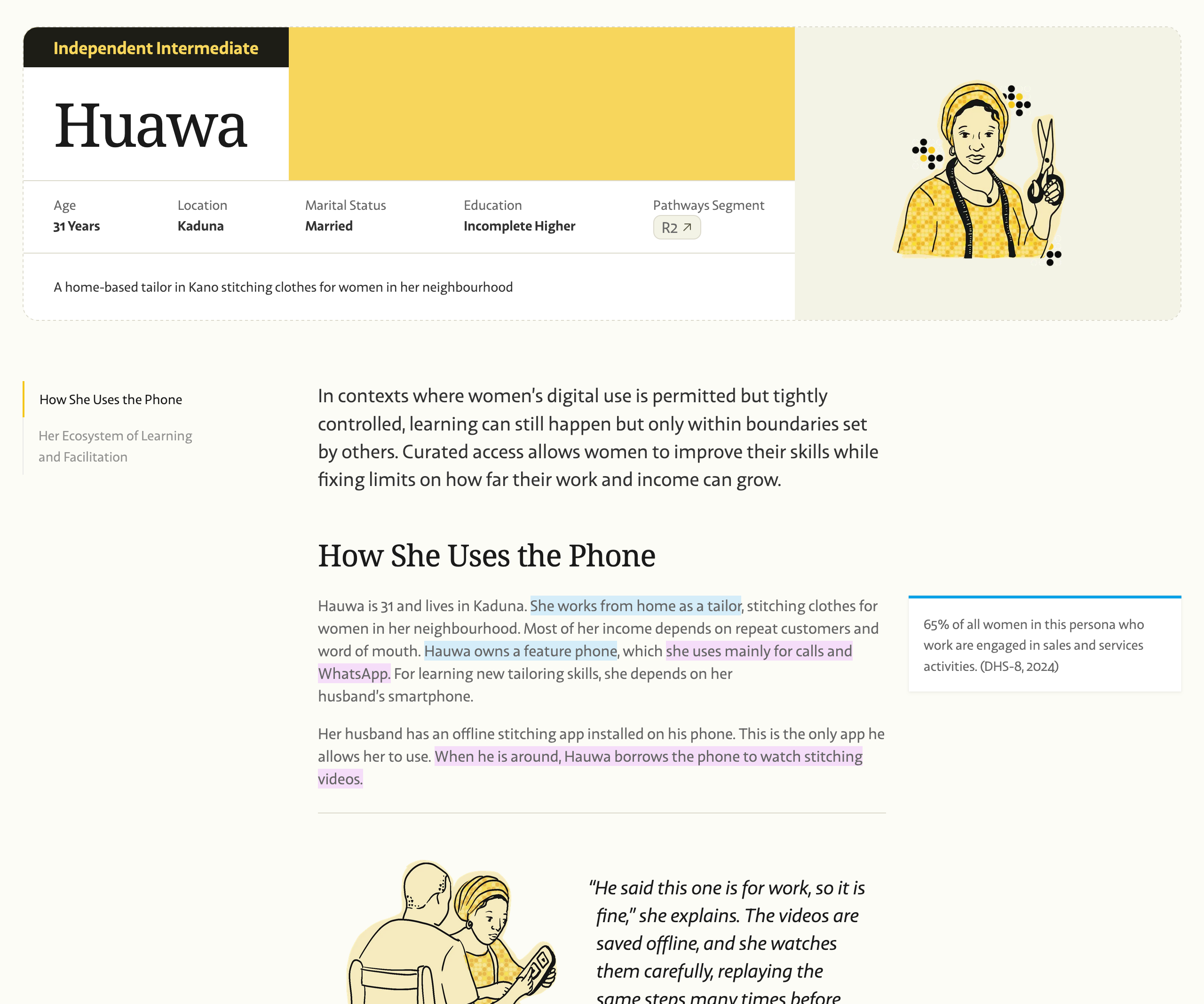
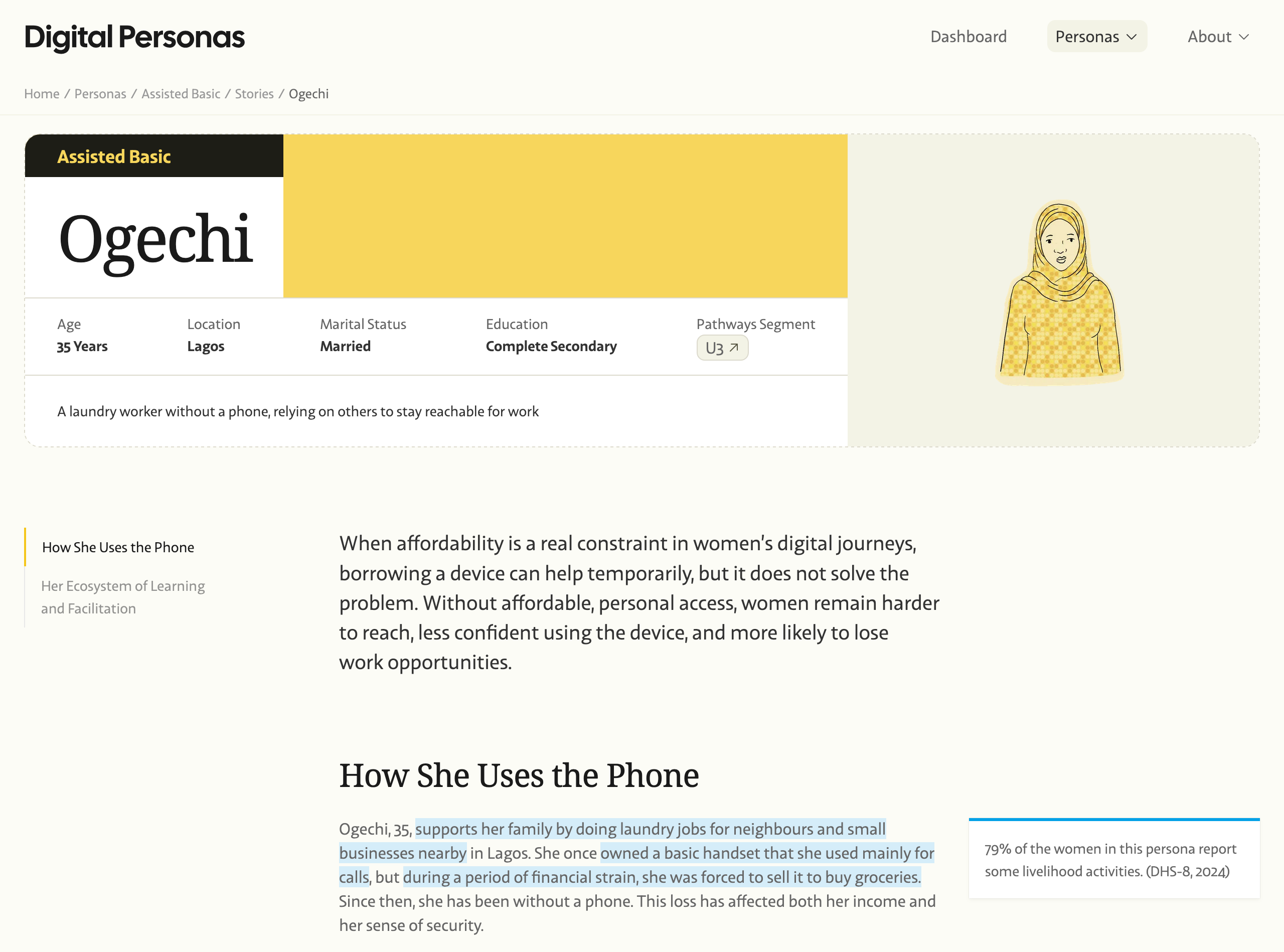
Findings for each _Persona_ are [also presented individually][10], accompanied by profiles of some of the women represented within the _Persona_. These [story pages][8] support inline annotations, letting authors surface additional context without interrupting the reading flow.
[][8]
The result at [designwithdp.org][dp] pairs a high-level comparative dashboard with deeper individual persona narratives, giving the research the range it needs to reach practitioners, policymakers, and designers alike.
[^1]: The three of us — Quicksand, Nitin, and Miranj — had previously worked together on [Project ARC][3], another Gates Foundation–supported research study, so we hit the ground running.
[dp]:https://designwithdp.org/
[1]:https://quicksand.co.in/
[2]:https://www.nitingarg.com/
[3]:https://miranj.in/work/project-arc
[4]:https://www.gatesfoundation.org/
[5]:https://designwithdp.org/regions
[6]:https://designwithdp.org/about
[7]:https://designwithdp.org/stories
[8]:https://designwithdp.org/stories/huawa
[9]:https://designwithdp.org/regions/northern-nigeria/rural
[10]:https://designwithdp.org/personas/independent-intermediate/northern-nigeria-rural
[stby]:https://www.stby.eu/
 [_Digital Personas_][dp] is the result of a [Gates Foundation][4]–supported study conducted by [Quicksand][1] & [Stby][]. It explores [how digital tools and services intersect with and impact the lives of women across Nigeria, Kenya, and Senegal][6]:
> Digital Personas shows how women actually use digital in context, not just in metrics. It combines qualitative insight with population-level data to support more grounded decisions about where digital works, and how it should be designed.
To present their findings, the researchers wanted a website that could hold comparative, multi-region data and offer different ways of looking at the insights while remaining easy to explore.
Miranj came on board as the web development partner, with [Nitin Garg][2] handling the site’s visual design[^1]. Design and development ran in parallel, with the website built on [Craft CMS](https://craftcms.com/).
#### Flexible Dashboards, Annotated Narratives
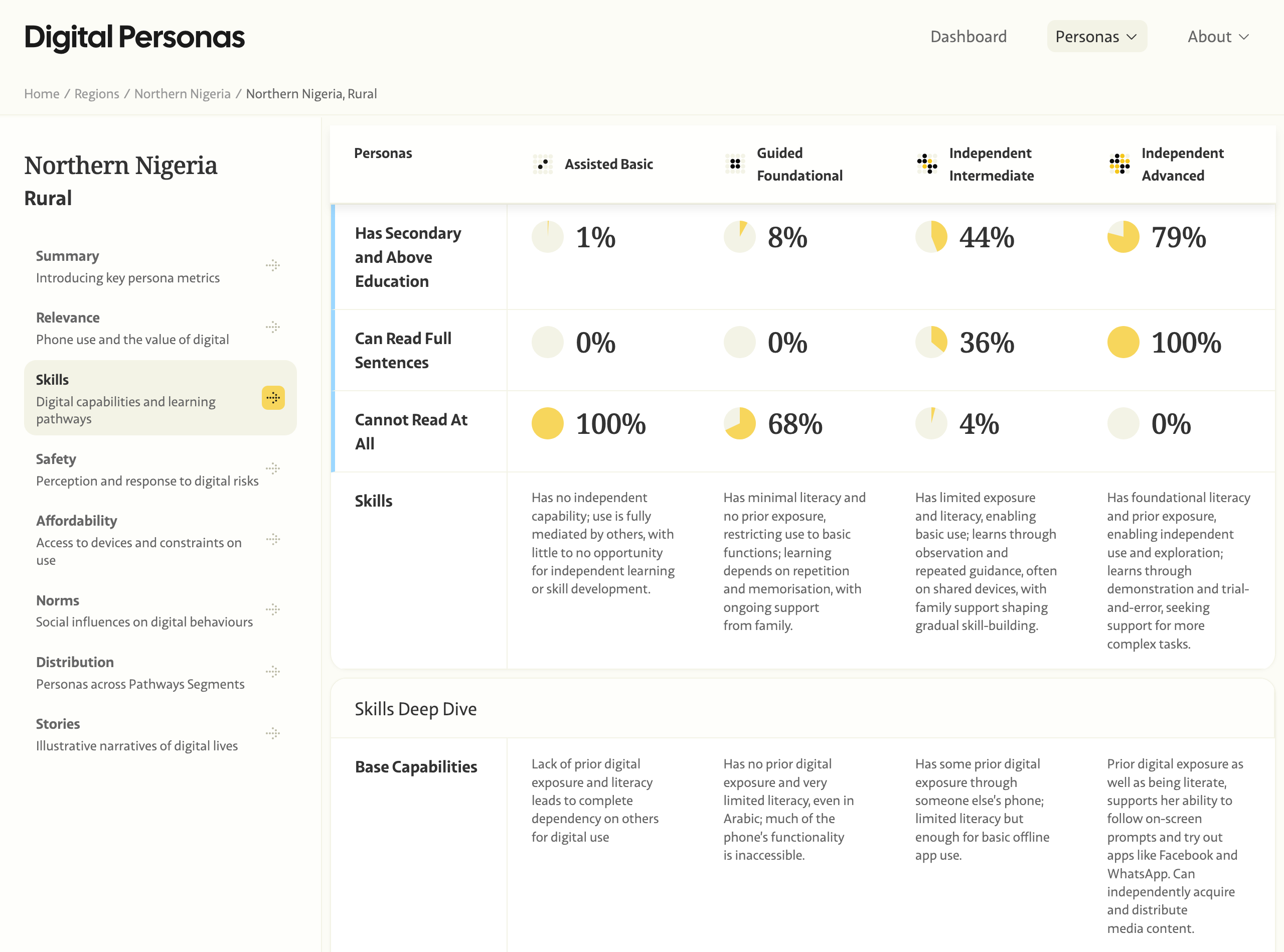
The core of the website is [a comparative dashboard][9] that lets visitors scan across _Personas_ and spot patterns at a glance. The challenge: the research data is heterogeneous. Different indicators need different treatments — metrics, pie charts, qualitative insights, pathway segments — and these vary across personas and countries.
[_Digital Personas_][dp] is the result of a [Gates Foundation][4]–supported study conducted by [Quicksand][1] & [Stby][]. It explores [how digital tools and services intersect with and impact the lives of women across Nigeria, Kenya, and Senegal][6]:
> Digital Personas shows how women actually use digital in context, not just in metrics. It combines qualitative insight with population-level data to support more grounded decisions about where digital works, and how it should be designed.
To present their findings, the researchers wanted a website that could hold comparative, multi-region data and offer different ways of looking at the insights while remaining easy to explore.
Miranj came on board as the web development partner, with [Nitin Garg][2] handling the site’s visual design[^1]. Design and development ran in parallel, with the website built on [Craft CMS](https://craftcms.com/).
#### Flexible Dashboards, Annotated Narratives
The core of the website is [a comparative dashboard][9] that lets visitors scan across _Personas_ and spot patterns at a glance. The challenge: the research data is heterogeneous. Different indicators need different treatments — metrics, pie charts, qualitative insights, pathway segments — and these vary across personas and countries.