Our blog

Page 1 of 11

  • Fifteen Years and Counting

    Mailing List
    Newsletter #7
    Sent on

    Hello again! Hope you’re having a pleasant day.

    Miranj turned fifteen in February. 🎂

    It felt like the kind of milestone that deserved more than a quiet acknowledgement — and as good a reason as any to do something we’ve been meaning to do for a while: write to you again. Because yes, it has been nearly four years since our last newsletter. We have no grand excuse for the silence. Life happened, work happened, the newsletter kept getting bumped.

    The world hasn’t stood still in the meantime. There’s a geopolitical and economic turbulence that seems to have become the unsettling new normal. Many of us carry a low hum of anxiety through our days, and we hope you and yours are navigating it as well as can be.

    And then there’s AI — which has gone from fancy demos to nearly ubiquitous presence in the life of almost every knowledge worker, ourselves included. More on that shortly.

    Here’s everything that’s been afoot at Miranj since we last wrote.

    🦋 A Renewed Sense of Purpose

    If you’ve known us since the 2010s, you may have noticed the new logo and a fresh coat of paint.

    A decade of work brought a certain clarity about what we do best and what we value most: we’re not just a studio that builds websites — we’re long-term thinking partners for organising and publishing stories on the web. Our most fulfilling engagements haven’t been one-off projects but ongoing relationships where we help clients plan carefully, make sound decisions, and solve problems as they evolve. When that happens, the website tends to last — some of our projects have been live for 57 years, some for over 10, which is something we’re quietly proud of.

    This brought us to our north star: enabling clients to communicate meaningfully on the web and preserving that knowledge over the long term.

    Designer, artist, and friend Kriti Monga translated this energy into a brand, and our friend (and designer) Tejas helped out with the typefaces. Our refreshed website and brand were soft-launched in February 2023.
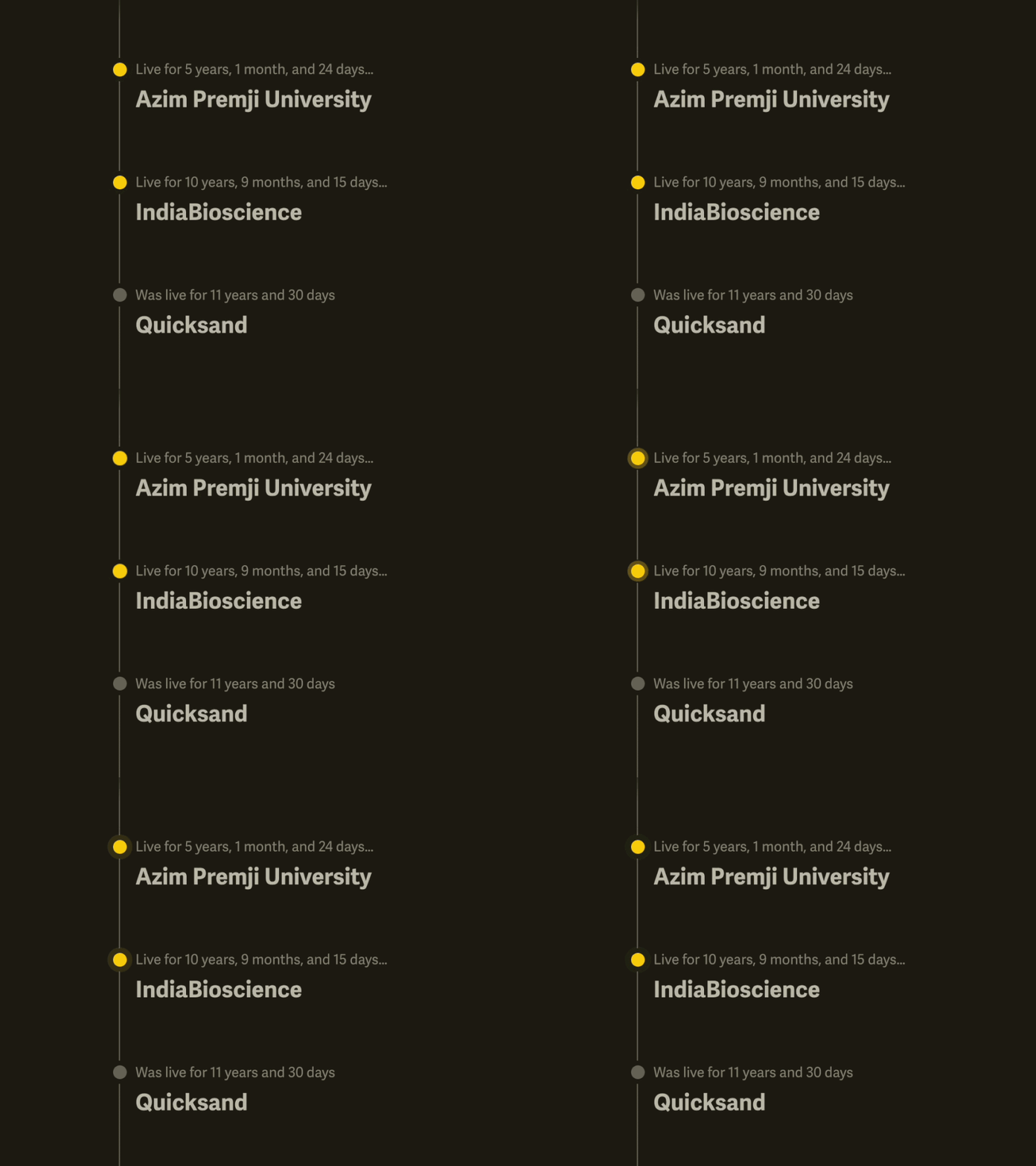
    Live Project Indicator

    Our work page now closely tracks how long each project has been live since launch. 

    🛠️ New Work

    We worked on dozens of projects; to highlight a few:

    1. The Nehru Archive — A digital archive of India’s first Prime Minister, launched with over 35,000 artefacts (letters, speeches, parliamentary debates, diary entries, etc.) and 3,000 visuals (photographs, cartoons and maps) covering 61 years of Nehru’s life, from 1903 to 1964. We charted out the product strategy and undertook the technical development alongside Oijo (who anchored the project) and Now Form (who led visual design). The archive went live on November 14, 2025 — Nehru’s birth anniversary, and exactly on the promised date.
      🔗 nehru​archive​.in

    2. CEPT University — Established in the 1960s by the renowned architect BV Doshi, CEPT has a rich legacy and significant influence on the field of architecture in India. Today it offers programs across design, planning, management, and technology in addition to its storied school of architecture. We led strategy, information architecture, and technical development alongside 3 Sided Coin, who led visual design.
      🔗 cept​.ac​.in

    3. Two global non-profit alliances:

      ICBL-CMC & The Monitor — A Nobel Peace Prize–winning international campaign to ban landmines, cluster munitions, and other indiscriminate weapons. Struggling with a JavaScript-heavy, slow, hard-to-edit React setup, we stepped in to audit their system, rebuilt their front-end architecture, and significantly improved editorial flexibility.
      🔗 icblcmc​.org 🔗 the​-mon​i​tor​.org

      MenEngage Alliance — A global network of non-profit organisations working with men and boys towards gender rights and gender justice for all. We migrated them off WordPress and built a multilingual website (English, French, and Spanish), ensuring accessibility across a network spanning five continents. The refreshed website was designed by Hamsa.
      🔗 menen​gage​.org

    We’ve also worked on sites for two Gates Foundation-supported research studies: digital lives of women in Africa, and health-seeking experiences of vulnerable populations, a South Asian literature and art publication called Daak Vaak, India’s founder-friendly venture capitalist Blume, a development consultancy for conflict regions, a UN-backed victim database of the Khmer Rouge genocide, a law office, and much more!

    🌱 New Services & Offerings

    Our north star — meaningful communication and long-term preservation of knowledge — has made us re-evaluate what we do (and what we don’t). Content websites don’t just get built; they need tending to. In recent years, we’ve expanded beyond strategy workshops and design/​development to formalise new services:

    New Hosting & Support Packages

    We’ve moved away from ad hoc, hour-based billing to structured, proactive packages: Glide 🪂, Cruise ✈️, and Boost 🚀. Each one is built around a different kind of client need, offering reliable hosting, predictable pricing, reduced administrative overhead, and the assurance that someone’s got their back — what we’ve started calling Peace of Mind™.

    Project Adoption

    We step in to help organisations struggling with specific aspects like performance, SEO, ease of use, or content flexibility of their existing websites — but not looking to abandon their entire investment merely to address the pain points. We audit the existing system, migrate it to a proven, fast, and robust technical stack, and take over ongoing hosting and support under our support packages (e.g. Valueimpakt, ICBL-CMC, Angkor Database, and MAADS Hotels). If you know someone struggling with website upkeep, we’d be glad to have a conversation.

    Static Archival

    We generate permanent static snapshots of content-heavy websites approaching end-of-life. Born out of our belief that websites are public knowledge resources that shouldn’t be erased from the internet’s memory, we built a tool and a workflow to preserve a site’s content long after the servers go dark. Some of our client sites — Internet Democracy Project, Obvious, IndiaBioscience forums and Project ARC — have been archived this way. This works for any server-side rendered website, regardless of backend or CMS.

    🎙️ Talks

    We’ve had a few opportunities to share our thinking beyond client work.
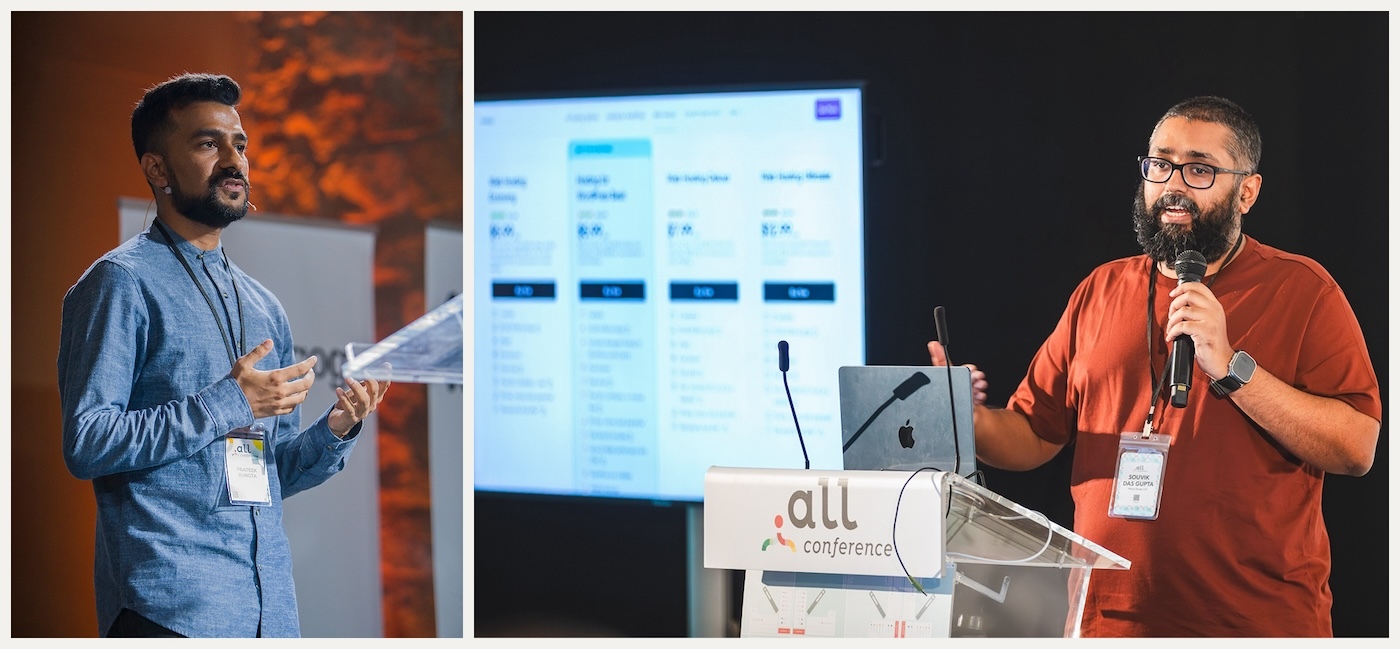
    Prateek speaking at Dot All Barcelona, Souvik speaking at Dot All Lisbon

    1. Demystifying the Craft CMS API for Twig Developers — Prateek explores how to tap into the full power of Craft and Yii APIs to write more efficient, reliable, and performant Twig templates.
      Dot All 2023, Barcelona

    2. Breaking News on the Web — Souvik shared tips and suggestions for building modern news sites for a cohort of news startups from the APAC region.
      Lighthouse Mentorship Session, May 2024

    3. Packaging Peace of Mind for Your Clients — Souvik traced our journey from a maker’s mindset to a caregiver’s mindset, and how we rethought our support offerings along the way.
      Dot All 2025, Lisbon

    4. Generating End-of-Life Static Archives of CMS-Based Websites — Prateek demonstrated the tool we built to preserve websites when they retire.
      Dot All 2025, Lisbon

    🧑‍💻 The Team

    Our team strength has hovered around 5 people for the last few years, but there have been some new faces, and some goodbyes:

    • Rishi joined in December 2023 from Mumbai, and looks after Project Management. He is our resident expert on software tools — always the first to find a new app, workflow, or piece of technology that makes the rest of us slightly embarrassed we hadn’t discovered it first.
    • Preethi joined in May 2025 as a web developer. She lives on the outskirts of Chennai, where she leads a considered, unhurried life — which belies just how much she manages to do, including homeschooling her daughter.

    Divya, Kavya, and Paul — each of whom played a meaningful part in the Miranj story — have moved on to new things. We’re grateful for the time we had working alongside them, and we wish them well.

    We managed to get the entire team together — once in Thailand, and last year in Goa — for some much-needed face time. Both trips gave us room to step back, think about where Miranj is headed, and enjoy each other’s company without a screen in the way.
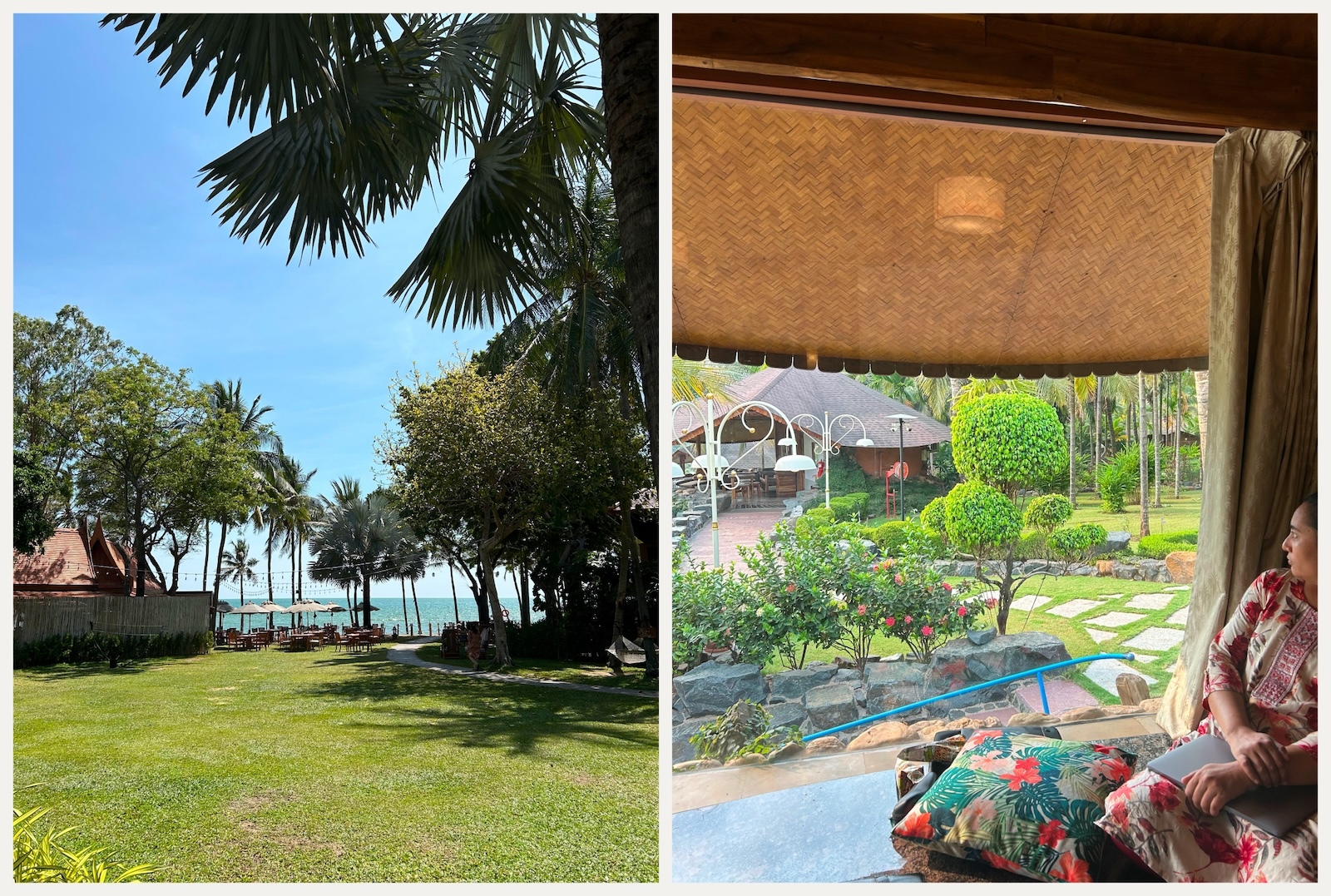
    Thailand retreat on the left, Goa retreat on the right

    Hua Hin, Thailand and Goa, India. 

    Founder Updates

    Prateek has relocated to Delft, the Netherlands 🇳🇱, to accompany his partner, who is studying there. We do miss him being reachable at more reasonable hours. And Souvik welcomed a daughter 👶 in late 2024, who is now an occasional participant in team calls — both a bundle of joy and a distraction.

    🤖 AI & Our Work

    We’d be writing a strange newsletter if we didn’t address the elephant in the room.

    Honestly? We’ve been sceptical and a bit slow to adopt. The noise has been overwhelming, and a fair amount of it has felt like hype. But AI is undeniably here — it’s changing how knowledge work gets done, and we’ve started finding our footing, cautiously but genuinely. There’s still a way to go.

    In the meantime, one question we’ve been sitting with is particularly relevant to our line of work: how do you make your website visible to AI? Just as SEO shaped how we built websites for search engines over the past two decades, a new discipline is quietly forming around making content readable and discoverable by LLMs. The Making your site visible to LLMs piece from Evil Martians is one of the clearest summaries of the current state of affairs. The Craft community has already started responding: the LLM Ready plugin automatically serves clean Markdown versions of your content to AI crawlers. Worth keeping an eye on how this space develops.

    🤝 Let’s Talk

    We’re on the lookout for interesting web projects and collaborations. Do email hidden; JavaScript is required if you (or anyone around) would like help with web strategy, design, or development.

    We’re also passively looking for someone to assist us in managing dozens of servers, hosting tools and other DevOps tasks — likely a part-time engagement. If that sounds like you or someone you know, we’d love to hear from you.


    It’s good to be back in your inbox. Do write to us — we’d genuinely love to hear how you’ve been.

    — From all of us at Miranj
    Miranj is Anita, Prateek, Preethi, Rishi, and Souvik.
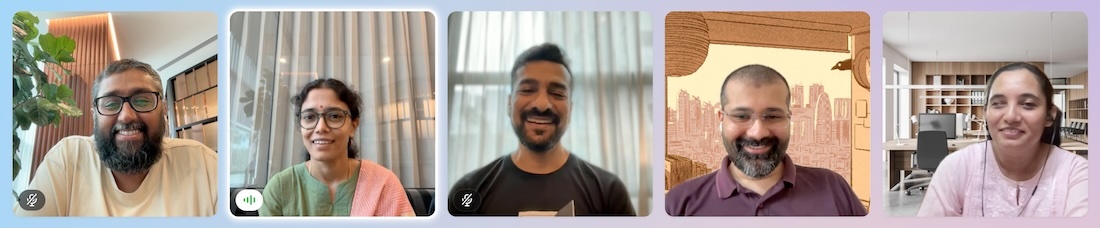
    Miranj Call

  • Flickr, Web 2.0, and the Commons

    Author
    Prateek Rungta
    Published

    Anil Dash reflects on the monumental role Flickr had in shaping late 2000s-era internet culture (often referred to as Web 2.0) in a deceivingly titled essay on his site:

    Flickr is a social sharing site for photography which was founded in 2004, and these days people might say that it shares some of its cofounders with Slack, though back when Slack started, everybody said that the company was started by some of the founders of Flickr. That’s because Flickr was arguably the most influential site of the Web 2.0 era, helping define everything from the user interface design to the bright colors to the easy way that developers could access data from the platform. A lot of the things that we take for granted on the modern social internet, like a friendly voice” used to communicate to users, were pioneered by Flickr, and then quickly came to be considered standard expectations for the apps and sites that followed. It’s hard to imagine that sites from Tumblr to Grindr would have omitted their final e”s without Flickr’s precedent.

    Miranj is very much a product of the same ethos. We may have decided to retain all the vowels in our name, but that spirit of the web we strive to uphold in all the work we do has its roots in the friendly, community-oriented, maker culture that we witnessed during Flickr’s hey-day.

    While it is nice to see Flickr back in the zeitgeist of late, it is especially heartening to see them turn their focus towards long-term thinking.

    The Flickr team at SmugMug did something special with their responsibility about these public works, due to their cultural significance to the world. They made the Flickr Commons, and brought in a team with expertise in digital archiving and community. This is a project of The Flickr Foundation, designed to preserve digital legacies, and begun in collaboration with no less than the U.S. Library of Congress (back before that was an institution under siege.) They are developing a hundred year plan for how to care for these works, which is virtually unheard-of in the digital world.

    Archival and preservation of content is another topic of major interest for us. Websites die for a whole host of reasons. Anil touches upon some of these in his essay:

    […] large institutions, especially ones that have developed complex processes for good reasons, like government agencies and big businesses, often have trouble maintaining public-facing web infrastructure over long timeframes. Running a website that millions of people can access requires constant updates and maintenance, guarding against a never-ending onslaught of security challenges (a task that’s rapidly getting more difficult!), and the internal knowledge on how a site was created in the first place often leaves when employees do.

    Businesses grow, restructure, wind up shop. We’ve all probably witnessed sites (including ones we had built) shut down. Good to see an organisation build protections for its content against that eventuality.

  • Packaging Peace of Mind for Your Clients

    Author
    Souvik Das Gupta
    Published
    Event
    Dot All 2025
    Location & Date
    ·Lisbon, Portugal

    Like many boutique web studios, in our early years, we were quite averse to offering support engagements to clients. However, as time passed, we began to realise the immense value offered by such engagements. Over the years, we experimented on our support offerings and gradually drifted from hour counting to smarter packaging of support services.

    The latest iteration of our support packaging is anchored around 3 unique client personas, offering simplicity of choice and several client benefits like—

    • Reduced circle of concern (not responsible for servers/​application stability)
    • Assurance that the best practices are being followed
    • Proactive support if something fails/​stops working
    • Reduced administrative overheads
    • Predicable pricing
    • Help and guidance, whenever they require
    • Knowledge that someone’s got their back

    At the same time, these packages have immensely benefited us in our sales, project management, developer efficiency, and most importantly, our business revenue.


    This talk takes the audience through our lived experiences, as we transitioned from squarely a maker’s mindset to that of a caregiver’s mindset that empathises with client’s challenges. Drawing from this journey, I explore the whys and hows of packaging support plans and offer insights and guidance on how one might repackage their offerings.

    If you’re keen to learn more, don’t hesitate to email hidden; JavaScript is required.

  • Generating end-of-life static archives of CMS-based websites

    Author
    Prateek Rungta
    Published
    Event
    Dot All 2025
    Location & Date
    ·Lisbon, Portugal

    Most of our attention regarding websites is around creating new ones, but we cannot escape the reality of having to deal with retiring old or existing websites as well. After facing this scenario a few times at Miranj we built a tool to handle the end-of-life stage for websites. This tool attempts to crawl all publicly accessible URLs for a site and create a static archive, much like the Internet Archive’s Wayback Machine. It has a few built-in smarts to detect and capture the many different ways assets are referenced in modern markup. It generates a folder structure that retains clean URLs, as well as intelligently handles URLs with query parameters.

    While the tool is not yet publicly available, we have been using it internally and some of the static archives generated by the tool of erstwhile CMS-based sites have been running smoothly in the wild for years.

    email hidden; JavaScript is required if you’re interested in archiving a content-heavy site of your own. Always happy to help or exchange ideas around digital archival1.

  • Demystifying the Craft CMS API

    Author
    Prateek Rungta
    Published
    Event
    Dot All 2023
    Location & Date
    ·Barcelona, Spain

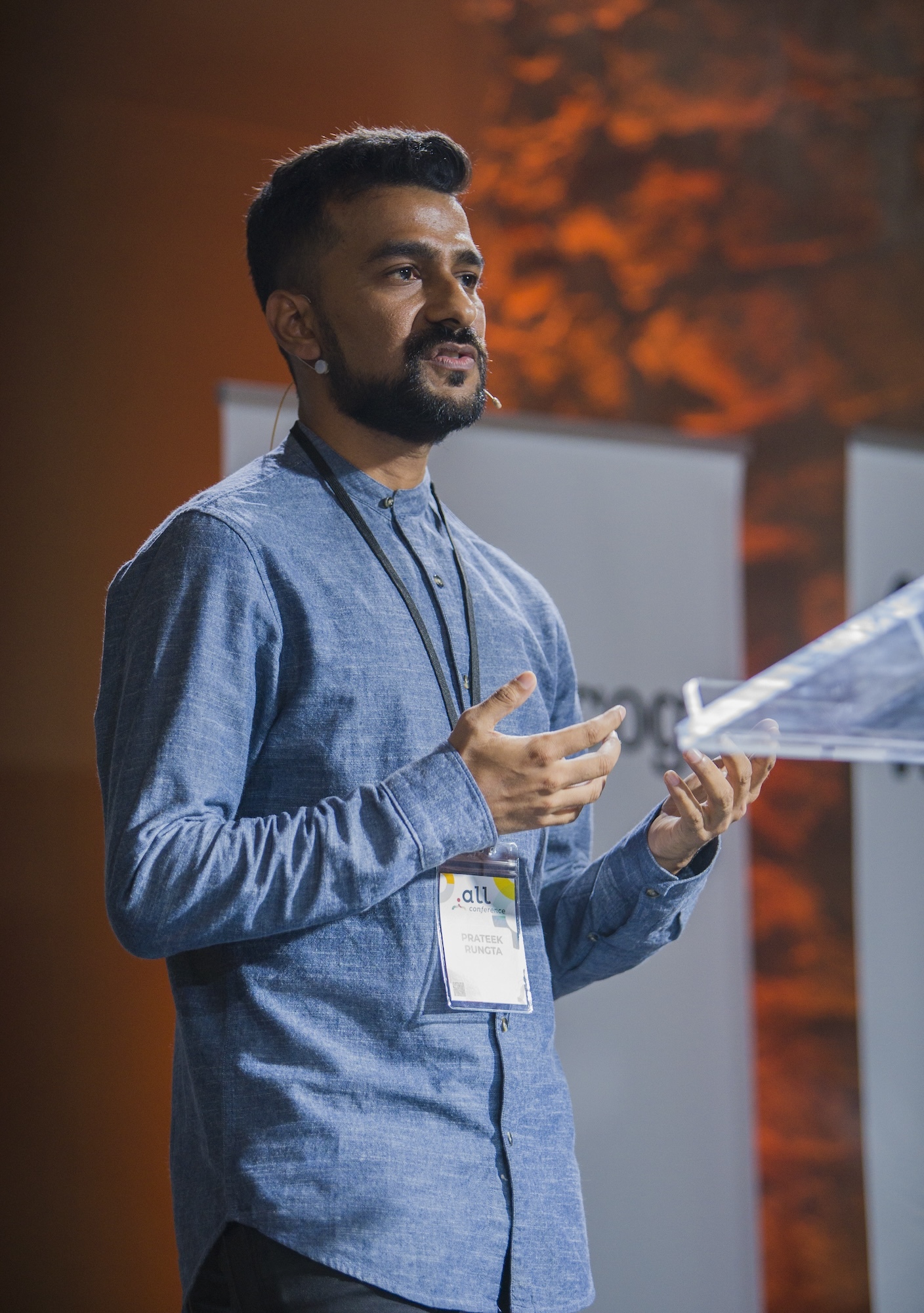
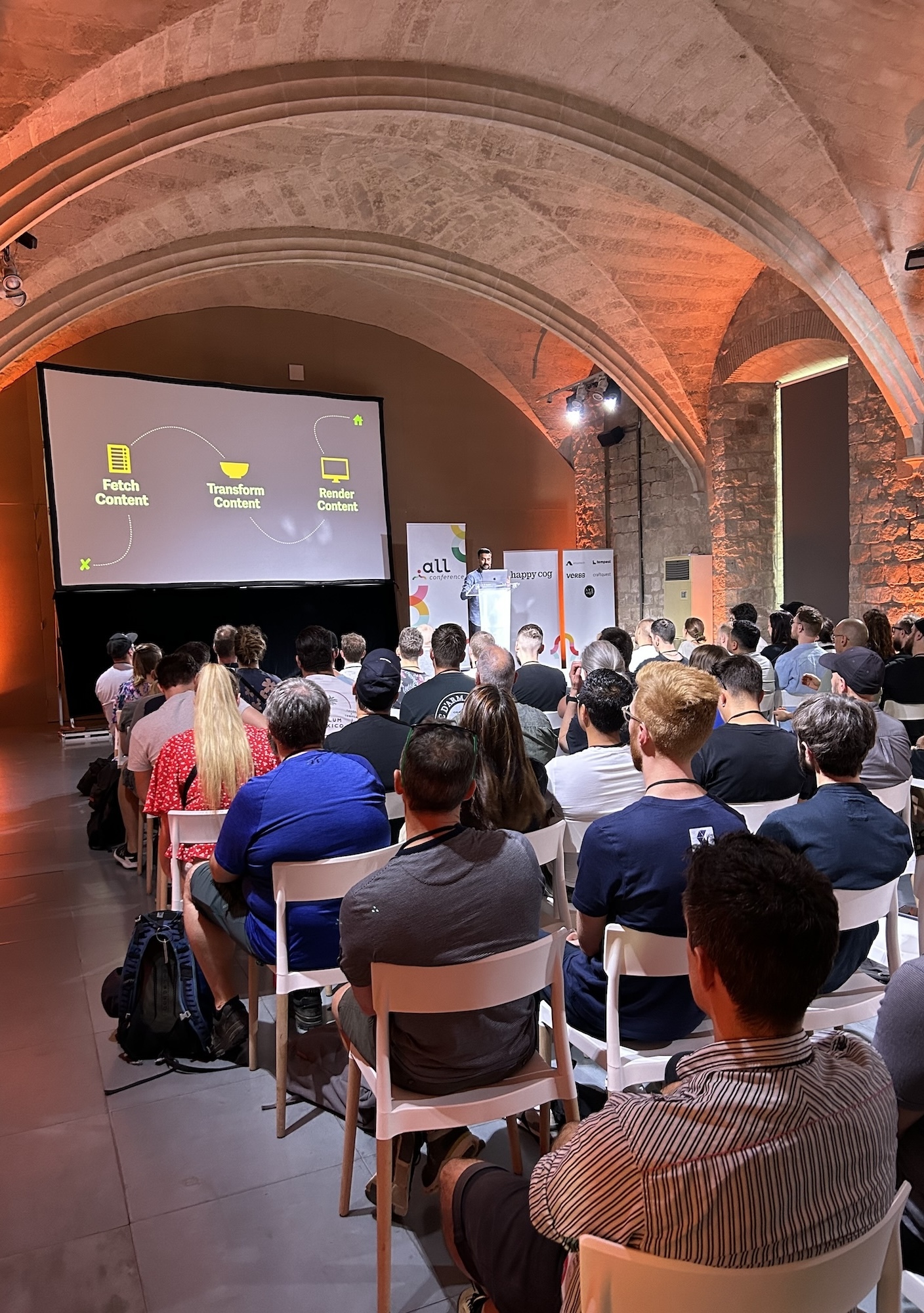
    The Pixel & Tonic team were kind enough to invite me back on the Dot All stage1 to share some of our learnings with a room full of people in Barcelona. This time, I spoke about leveraging some of the power and tools that Craft already ships with — filters, functions, collections, helpers, services, caches, and much more — right from within Twig.

    The talk covers three broad areas:

    • We start by looking at the benefits of leveraging Craft (and Yii) APIs in general and the ways in which that makes us more efficient developers, and our code more reliable and performant.

    • Having established the why, we move on to examining commonly occurring scenarios during the development lifecycle and identifying patterns where we can start falling back to and integrating more of the API.

    • In the third and final part, we look at ways to identify the appropriate Twig filters and functions, or Craft helpers, services, and components that can be plugged in these scenarios.

    Demystifying the Craft API for Twig Developers by Prateek Rungta on Vimeo.

    In order to demonstrate some of these more richly with relatable examples, I created a bare-bones site for a fictional Dot All Music Festival. The code for this site is up on GitHub.

    Prateek speaking at Dot All 2023 Audience listing to the "Demystifying the Craft CMS API" talk at  Dot All 2023

    Photographs from the event. 

    This talk is based upon my own developer journey using Craft CMS over the years. I also drew from the experience of witnessing first-hand the individual development journeys of my teammates, and spotting common patterns between their paths and my own.

    I hope this helps you discover and use more of the powerful tools available to use inside a Craft CMS Twig template file. email hidden; JavaScript is required if you found any of the techniques useful or discovered something new that you could use.


    1. We have previously delivered talks on Fortifying Craft CMS for High Traffic at Dot All 2019 in Montréal, and Modular Architecture for Building Content Websites at Dot All 2018 in Berlin. ↩︎

  • Micro-caching in Nginx for High Performance

    Author
    Prateek Rungta
    Published
    Event
    Bangalore Site Speed 6th Edition
    Location & Date
    ·Online

    In the vast, multi-layered subject area of web performance, server response time is an important metric. From a CMS standpoint, however, it is one of the most significant. Best practise recommends a 200ms or lower time-to-first-byte. For medium to high-traffic sites, server load is another vital statistic.

    We were invited to talk about our learnings from optimising and hosting high-traffic sites such as Guiding Tech at the sixth edition of the Bangalore Site Speed Meetup.

    Bangalore Site Speed Meetup 6th Event on YouTube.

    In this talk we go over caching as a broad performance strategy, before dive into micro-caching as a specific approach to handle loads of 10 to 100 concurrent requests per second. We cover the filter, storage, and invalidation implementations1 of this caching strategy in Nginx. The talk concludes by comparing metrics of our caching strategy against a target of achieving sub-200ms TTFB response times for all visitors.

    This talk is a newer revision of the Fortifying Craft CMS for High Traffic talk from 20192 which, as it says on the tin, was specifically tailored for Craft CMS based workflows. In this edition we focus on just micro-caching as a strategy and look at it independent of any specific CMS running at the application layer.


    1. The sample Nginx config file from this talk is available on GitHub. ↩︎

    2. Delivered at Dot All 2019 in Montréal, Canada↩︎

  • We are looking for a senior level web developer (with around 57 years of experience) to help us continue making great websites. This is a remote position. You may be located anywhere in India or the rest of the world (with at least a 4‑hour time overlap with the Indian timezone).

    About Us

    Miranj is a strategic web design and development studio. We’ve been in business for over 13 years and have consciously remained a small specialised team with a clear purpose. We are laser-focused on the web — no mobile/​native apps, no product design, no digital UI/UX, no trying to imitate a full-service agency”. We’ve been creating inclusive, accessible, ceaseless, clear, performant, future-friendly websites and with each passing year, we want to keep getting better at our craft.

    We work directly with clients (no outsourced assignments or communicating via intermediaries) and offer them a turnkey web solution — strategy, design, development, support, and hosting. We’ve worked in domains such as media & publishing, manufacturing, conferences, recruitment, and even for other design studios. However, what sets us apart is our priority towards projects that are meaningful and serving society. Nearly two-thirds of our work is in the education (e.g. universities, science outreach, etc.) and non-profit (policy & advocacy, health, public interest campaigns, philanthropy, etc.) space.

    We’re incorporated in New Delhi but in practice, we’re a fully remote organisation. Our team members are distributed between New Delhi, Mumbai, Bangalore, and Phnom Penh (Cambodia). And we occasionally share our learnings with the web community at conferences around the world.

    Our Expectations

    As a senior web developer, you should be comfortable with —

    • The entire web stack i.e. front-end (HTML/CSS), back-end, writing templates and working with modern JavaScript.
    • Taking ownership of project repositories and ensuring stability over release cycles.
    • Writing code for different & diverse application frameworks (in PHP / JavaScript etc).
    • Ensuring low technical debt by catching and refactoring breaches.
    • Creating robust & modular templating architectures.
    • Automating processes by leveraging build tools and pipelines.
    • Handling, manipulating and migrating data sets between environments.
    • Leveraging shell scripts & command-line tools.
    • Deploying projects on servers.
    • Working with designers & managing developer hand-offs.
    • Writing progressively enhanced HTML, CSS, JavaScript and adopting third-party libraries.

    We believe the following traits will play nicely —

    • You favour a long term relationship over a short stint
    • You are eager to take charge and get stuff done
    • You are open to learning and can pick up new technologies by reading documentation & tutorials
    • You value your commitments
    • You are good at communication, including writing
    • You appreciate clean, readable code and honour coding style/​standards
    • You like sharing ideas on how to make work more fun, meaningful and fulfilling
    • You believe that an organisation should be run sustainably and with financial prudence

    Your Responsibilities

    Your work at Miranj will involve —

    • Leading web projects and owning client deliverables.
    • Understanding key project requirements and architecting robust technical solutions.
    • Translating designs into CMS templates, building custom features and plugins that extend CMS functionality.
    • Performance optimisation through caching, image optimisation and other strategies.
    • Maintaining, supporting, refactoring and upgrading past projects (typically, LAMP stack).
    • Collaborating closely with external partners in a project team.

    What’s on offer?

    • Opportunity to work with modern systems and software, with continuous learning
    • Projects that are meaningful and socially-conscious
    • Monthly team hangout, which we’re told are fun
    • Medical insurance (if you’re based in India)
    • A sustainable pace of work (5‑day work week and up to 40 days of paid time off each year)
    • A Mac for work use
    • Support for speaking at conferences
    • A culture that values reason and debate over authority; autonomy over control; slow and considered decision-making over fast and hasty; and a healthy work-life balance
    • A healthy compensation, proportionate to the value you can bring to us

    How to apply?

    Fill out this application form. Make sure you point us to 3 projects that you’re proud of. For each one, mention the project duration, your role, and your contribution. In addition, please share your online presence (such as Twitter/​Mastodon, GitHub, LinkedIn, Website/​Blog). And oh, do mention your hobbies. We’re curious about what you find interesting outside work.

    We do not discriminate based on caste, race, religion, orientation, gender, physical ability, formal education, age, nationality or any such factors. If you belong to any under-represented community we strongly encourage you to send in your application.


    If you know a suitable candidate for this opening, kindly refer them to us. If the endorsed candidate is a successful hire (retained post-3-month probationary period), we’ll be happy to share a referral fee of ₹50,000/- for your gesture.